

Introduction
Beyond the well-known Abaya and Kandura lies a deeper layer of Emirati adornment, one rich with symbolism and history. The traditional Burqa (face mask) and ornate Bedouin jewelry are not merely decorative artifacts; they are narrative objects that speak volumes about the region’s social history, aesthetic values, and the practical wisdom of its people. These elements of dress served as a unique language of identity, status, and cultural belief.
History
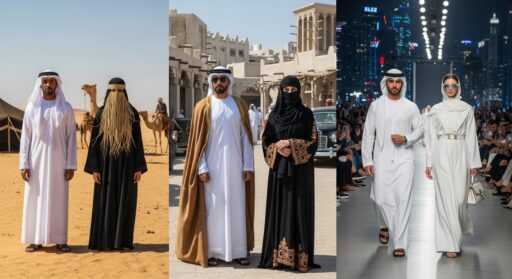
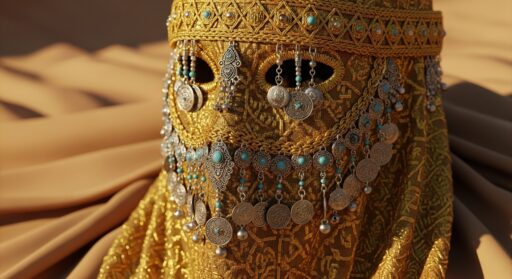
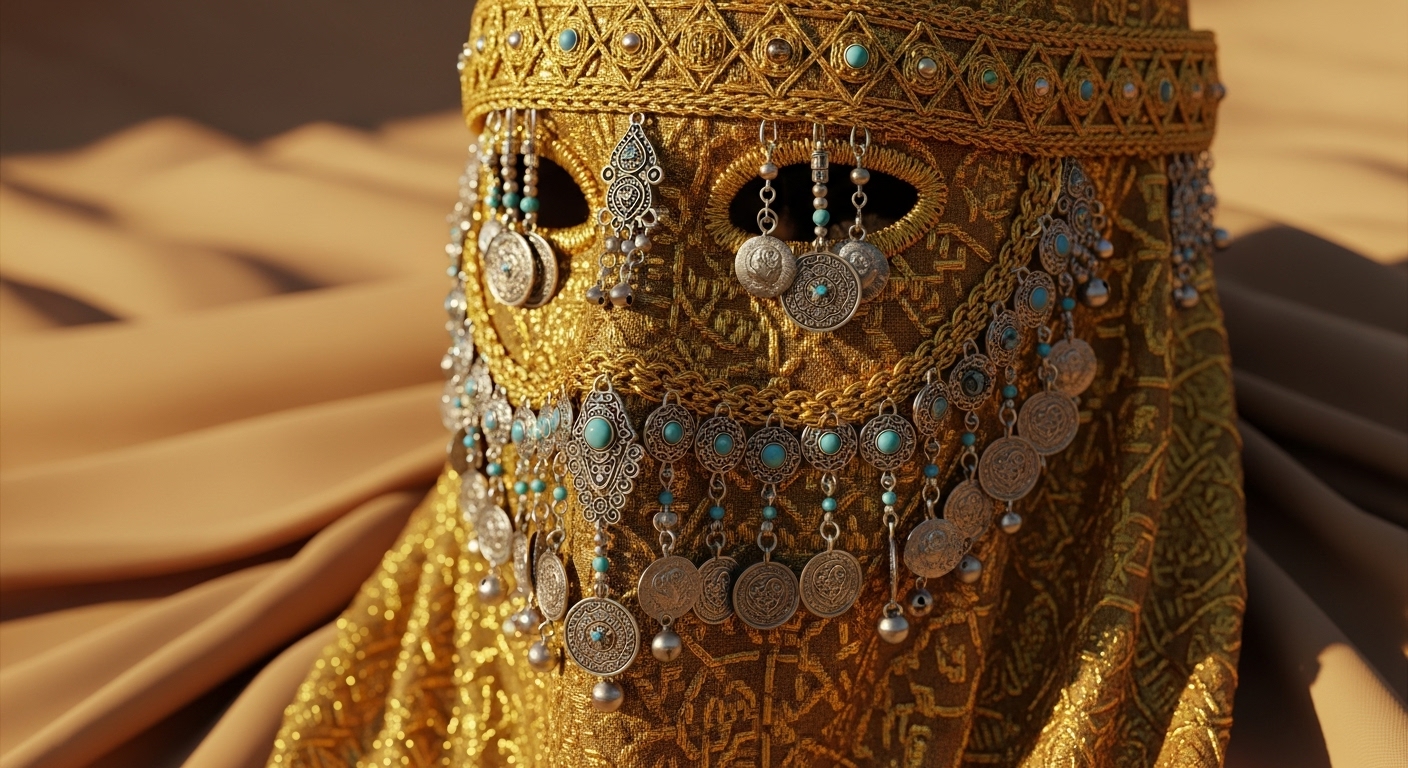
The Burqa, a metallic-looking facial covering worn by older generations of women, has a history stretching back centuries in the Gulf region. Its primary function was practical: to protect the face from the harsh desert sun and wind, effectively acting as an early form of sunscreen. Made from a variety of materials including leather, cotton, and even metallic threads, its design varied significantly between regions, allowing the knowledgeable eye to identify a woman’s tribal affiliation. Similarly, Bedouin jewelry, crafted primarily from silver, coins, and semi-precious stones, represented a family’s mobile wealth. In a nomadic culture, jewelry was a safe and portable way to store capital, far more practical than fixed assets.
Key Features
The traditional Burqa was characterized by its distinctive shape, often covering the forehead, nose, and upper lip, and was held in place by ties around the head. Its decoration ranged from simple and functional to elaborately embroidered for special occasions. Bedouin jewelry was notably heavy and substantial. Key pieces included heavy necklaces (Hasaat), elaborate headpieces (Tasabah), and numerous bracelets and anklets. A prominent feature was the use of actual coins (like the Maria Theresa Thaler) and specific symbols like the “hand of Fatima” (Khamsa) to ward off evil, blending economic utility with spiritual belief.
Cultural Significance
These adornments were deeply embedded in a woman’s life journey. A Burqa was often first worn after puberty, signaling a transition to womanhood. Jewelry was a fundamental part of a bride’s dowry (Mahar), representing the groom’s family’s wealth and the new bride’s financial security. The weight and quantity of a woman’s jewelry were direct indicators of her family’s social standing. Furthermore, the specific motifs and amulets woven into the jewelry were believed to offer protection from envy and evil spirits, embedding spiritual significance into daily wear.
Modern Relevance
While the everyday wearing of the traditional Burqa has declined among younger generations, it remains a powerful cultural artifact, often worn during traditional weddings and folk performances to honor heritage. The aesthetic principles of Bedouin jewelry, however, have seen a vibrant revival. Contemporary Emirati and Gulf designers frequently draw inspiration from these historic pieces, reinterpreting the bold geometric patterns, Khamsa motifs, and coin details in modern gold and diamond settings. This ensures that the symbolic language of the past continues to be spoken, connecting modern luxury with ancestral identity.
Conclusion
The Burqa and Bedouin jewelry are golden threads in the fabric of Emirati culture. They remind us that adornment was never purely superficial; it was a complex system of communication, protection, and economics. By understanding these artifacts, we gain a deeper appreciation for the sophistication of traditional Emirati society. Their legacy, whether preserved in museums, revived in modern jewelry, or honored in ceremonial use, continues to inform and enrich the nation’s understanding of its own identity.