

Introduction
In the UAE, the intricate, temporary art of Henna is far more than a decorative body stain. It is a deeply rooted cultural practice, a language of celebration, blessing, and identity that has been passed down through generations of women. From the simplest dots to the most elaborate floral and geometric patterns that cover hands and feet, henna tells a story of social bonds, life transitions, and deeply held beliefs that transcend mere aesthetics.
History
The use of henna, derived from the crushed leaves of the Lawsonia inermis plant, has an ancient history in Arabia and North Africa. Its natural cooling properties made it practical for soothing the skin in a desert climate. Over centuries, its application evolved from a simple paste to a complex art form. In the context of the UAE’s pearling history, the application of henna before a long diving season was believed to bring good luck and protection. It was a ubiquitous part of a woman’s world, with knowledge of mixing the paste and applying designs being transferred from mother to daughter.
Key Features
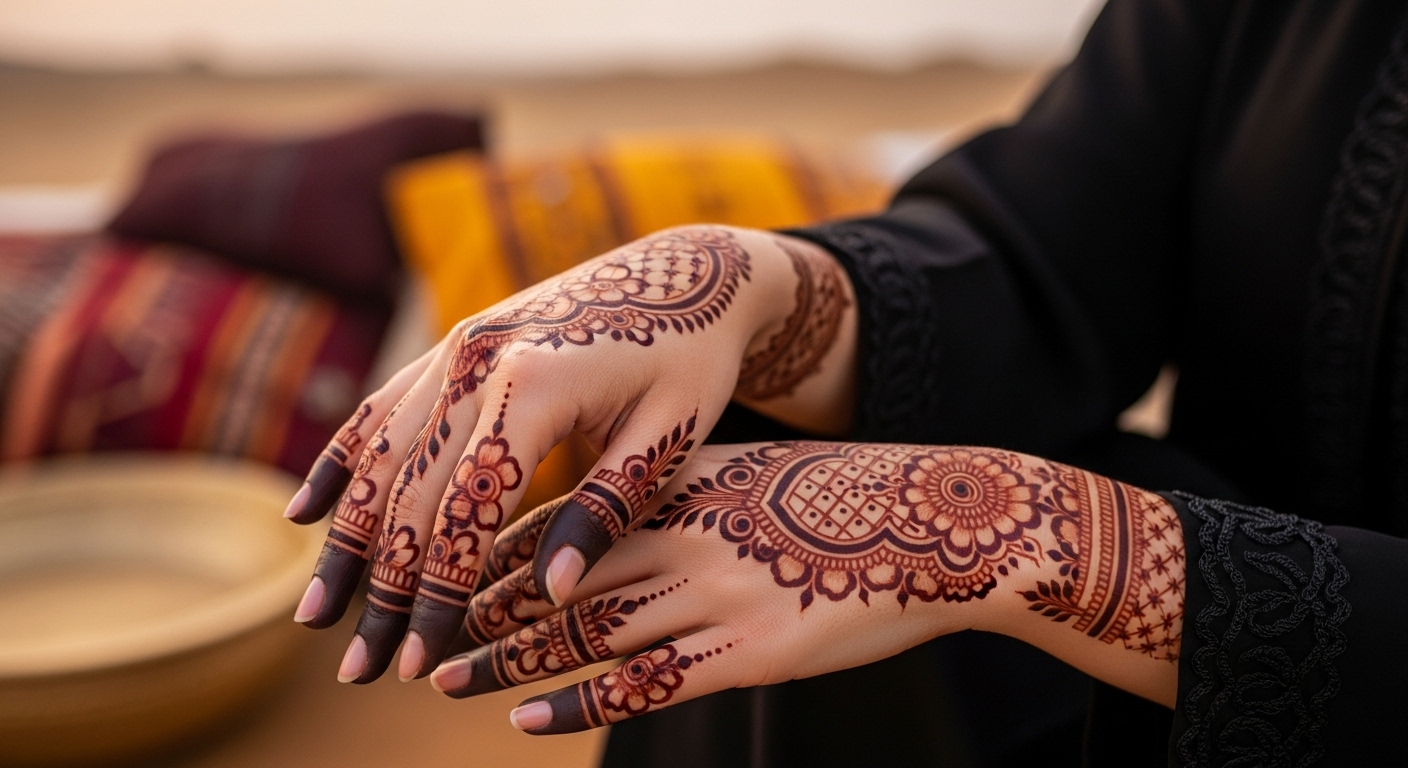
Traditional Emirati henna is characterized by its bold, dense patterns. Unlike the fine, lace-like designs from other regions, Emirati style often features large floral motifs (like roses and lilies), geometric shapes, and filled-in areas that create a strong visual impact, particularly on the palms and the backs of the hands. The key feature is the stain—a deep, reddish-brown color that is seen as a sign of a good application and is believed to symbolize the strength of love and prosperity in the context of a wedding.
Cultural Significance
Henna’s primary role is as a social and ritualistic marker. Its most important application is during wedding festivities, in the ceremony known as “Laylat Al Henna” (The Night of the Henna). For the bride, the complexity and darkness of the design are thought to reflect the strength of the love between the couple and bring barakah (blessing) to her marriage. It is also a deeply social, women-only event that strengthens female kinship and community bonds. Beyond weddings, henna is applied for Eid celebrations, to welcome a newborn, and for other joyous occasions, marking the body for times of happiness.
Modern Relevance
The tradition of henna remains vibrantly alive in the UAE, but it has also adapted to the modern era. While traditional designs are still cherished for major ceremonies, contemporary artists have incorporated new influences, creating patterns that feature modern symbols, portraits, and even calligraphy. Henna studios are popular businesses, and the art form is shared and celebrated across nationalities, making it an accessible part of the UAE’s cultural landscape. It continues to be a powerful, wearable link to heritage, especially for young Emiratis who see it as a beautiful and meaningful way to express their cultural pride during national and religious holidays.
Conclusion
Henna is a living tapestry on the skin, weaving together history, community, and celebration. It is a practice that has gracefully navigated the passage of time, maintaining its profound cultural significance while allowing for contemporary expression. More than just a temporary tattoo, henna is a cherished ritual that continues to mark the most important moments in an Emirati’s life, ensuring that the stories and blessings of the past are visibly carried into the future.