

Introduction
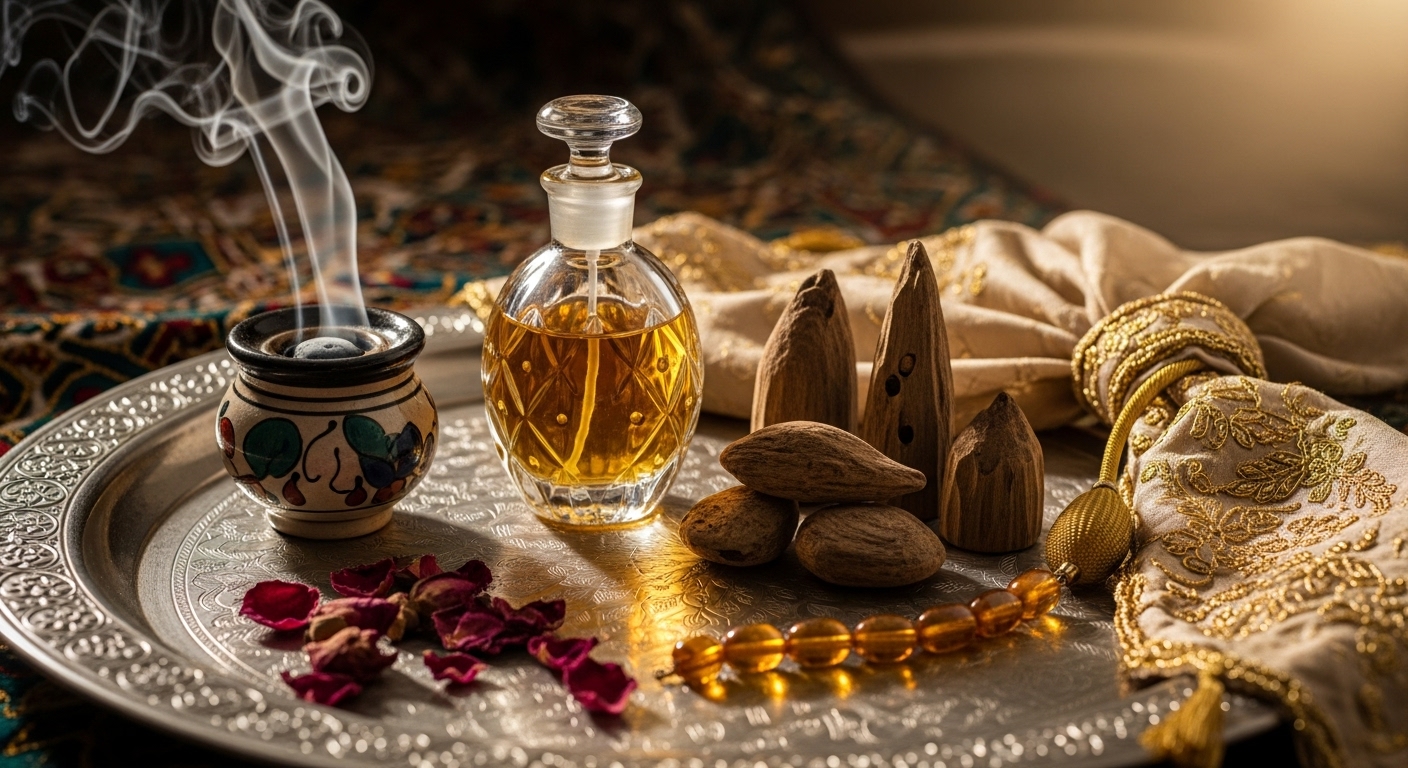
In the UAE, identity is not only seen but also smelled. The intricate culture of fragrance is an essential pillar of Emirati hospitality, personal grooming, and spiritual life. Far surpassing the Western concept of perfume, traditional Emirati scents are deep, complex, and deeply woven into the social fabric. At the heart of this olfactory tradition lies Oud, a precious ingredient that is much more than a scent—it is a cultural icon.
History
The history of perfume in the region is as old as the trade routes that crisscrossed the Arabian Peninsula. The UAE, strategically located on ancient trade paths, was a hub for the exchange of incense, spices, and precious woods from India, Africa, and beyond. This access to diverse raw materials allowed a unique fragrance culture to flourish. The burning of Bakhoor (scented wood chips) to welcome guests and the anointing of the body with rich, oil-based attars became deeply established customs, with recipes and preferences passed down through generations.
Key Features
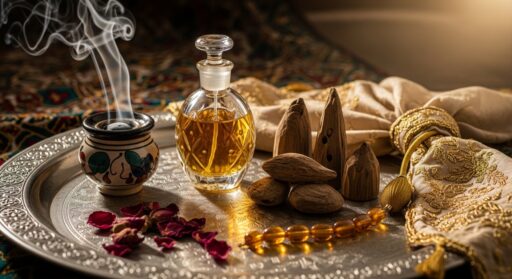
Traditional Emirati perfumery is distinct. Unlike alcohol-based Western perfumes, it relies heavily on oil-based attars. The most revered ingredient is Oud (or Oudh), a dark, resinous heartwood formed in the Aquilaria tree when it becomes infected with a specific mold. This process makes it incredibly rare and valuable. Oud produces a deep, woody, and long-lasting scent. Other key notes include rose, saffron, musk, and amber. Fragrances are experienced in multiple ways: through personal attars applied to the skin and clothes, and through the ambient scent of Bakhoor, which is burned over charcoal to perfume the home and clothing.
Cultural Significance
Fragrance is a non-verbal language of respect and generosity. The offering of Bakhoor to guests is a fundamental act of hospitality, a way to make them feel honored and comfortable. It is an unspoken rule that a guest should not leave a host’s home without carrying the scent of their hospitality. On a personal level, wearing a distinct, high-quality fragrance signals good hygiene, sophistication, and social standing. The choice of scent is deeply personal, often creating a lasting olfactory memory that becomes part of one’s identity.
Modern Relevance
The global luxury perfume industry has fully embraced the allure of Oud, with nearly every major house featuring an “Oud” fragrance. In the UAE, this has created a fascinating synergy. While international brands cater to a global interpretation of the scent, local perfumers and houses continue to thrive, preserving traditional methods and creating blends that resonate with the Emirati palate. Modern Emirati perfumers are innovators, blending classic Oud with contemporary notes to create scents that are both nostalgic and forward-looking, ensuring the tradition’s survival.
Conclusion
The culture of scent in the UAE is a profound example of how tradition can be both preserved and evolved. Oud and Bakhoor are not relics of the past; they are living, breathing aspects of daily life that continue to define social interactions and personal identity. In a nation that looks relentlessly toward the future, the persistent and cherished cloud of fragrance that lingers in its majlis and on its people serves as a constant, beautiful reminder of a deeply rooted cultural soul.