
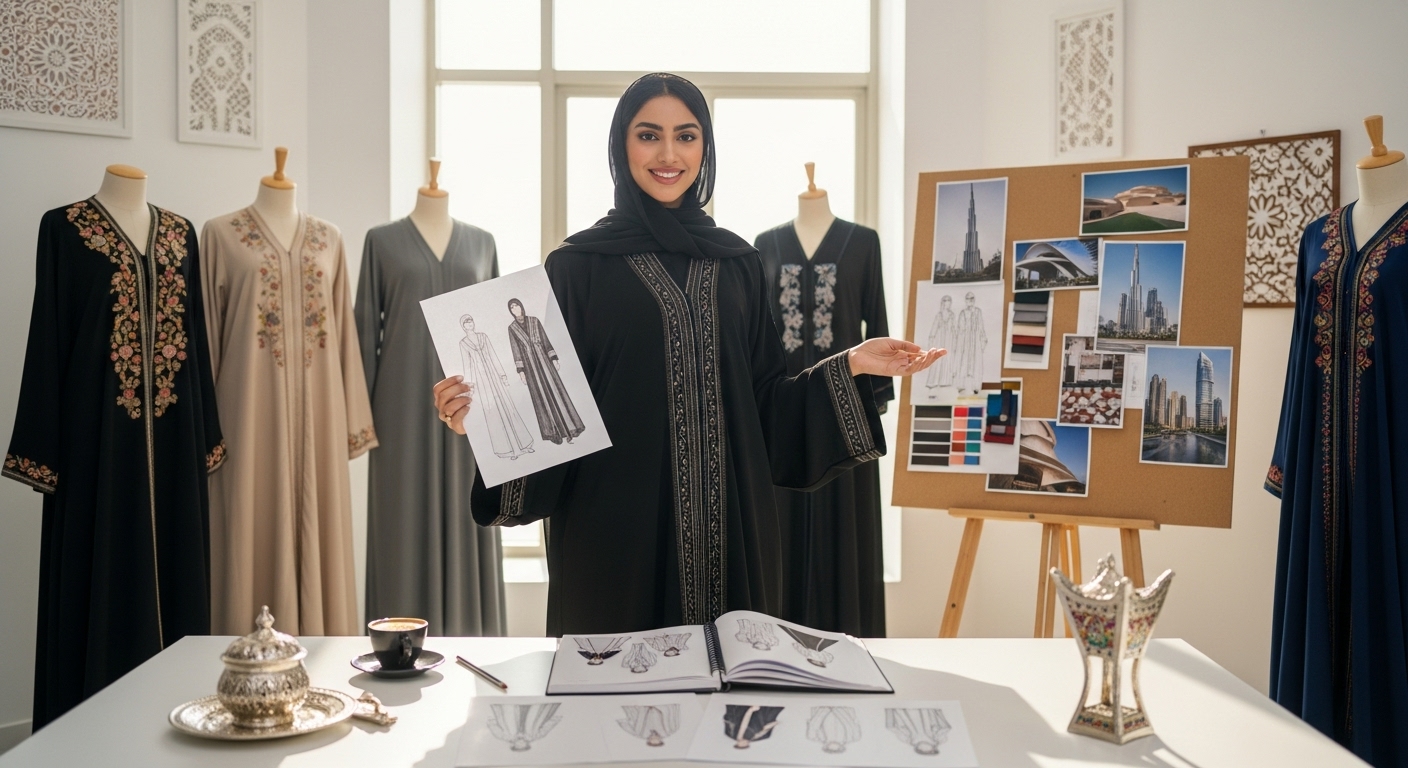

Introduction
The Abaya, once a uniform symbol of modesty, is undergoing a profound transformation. No longer confined to a simple black cloak, it has become a dynamic canvas for artistic expression, innovation, and personal style. This revolution is being led by a new generation of Emirati designers who are skillfully weaving their heritage with global fashion trends, redefining what it means to dress modestly and fashionably in the modern world.
History
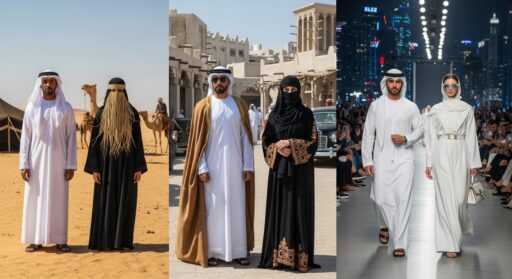
Traditionally, the Abaya was a practical, floor-length garment made from black crepe or georgette. Its primary functions were modesty, in line with Islamic principles, and protection from the elements. For decades, its design remained largely unchanged, with variation found only in the subtlety of its stitching or the simplicity of its fastenings. It was a garment meant to conceal, not reveal, the individual’s personality. This began to change in the late 1990s and early 2000s, as increased global connectivity and a burgeoning sense of national pride inspired a fresh perspective on traditional wear.
Key Features
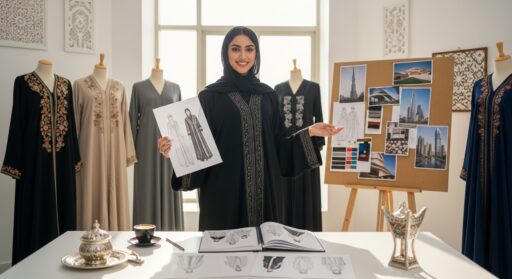
The modern Abaya is characterized by its diversity and artistry. Key features that distinguish it from its traditional counterpart include the use of color—from pastels to bold jewel tones—and a vast array of fabrics, including lace, silk, chiffon, and even leather. Embroidery has evolved from simple Talli to intricate, laser-cut patterns, Swarovski crystals, and hand-painted details. Structural innovation is also key, with designers experimenting with capes, kimono sleeves, layered cuts, and dramatic silhouettes that draw inspiration from international haute couture, all while maintaining the garment’s core principle of modesty.
Cultural Significance
This evolution is culturally significant as it represents the agency and voice of modern Emirati women. By customizing their Abayas, women are asserting their individuality within the framework of their culture. The Abaya has become a statement of “modest fashion,” a global movement that the UAE is at the forefront of. It demonstrates that cultural adherence and personal style are not mutually exclusive but can be powerfully synergistic. These designer Abayas are worn with pride at high-profile events, international conferences, and in daily life, projecting an image of a culture that is both self-assured in its traditions and open to the world.
Modern Relevance
The redefined Abaya is highly relevant to the UAE’s contemporary identity. It is a booming economic sector, with dedicated Abaya boutiques and fashion shows attracting international attention. Emirati designers like Hussa Al Humaidhi, Alia Bin Omair, and Amina Al Jassim have gained global recognition for their work. Furthermore, this movement has empowered a generation of female entrepreneurs, turning a cultural staple into a engine of creative and commercial enterprise. It speaks directly to the youth, offering them a way to connect with their heritage without compromising their modern sensibilities.
Conclusion
The transformation of the Abaya is a powerful metaphor for the modern UAE itself: respectful of the past but boldly innovative in its pursuit of the future. Emirati designers have successfully transformed a traditional garment into a global fashion phenomenon, proving that tradition is not a cage but a launchpad for creativity. The modern Abaya is no longer just a cloak; it is a celebration of identity, a testament to female empowerment, and a vibrant, ever-evolving art form.